7.83 Hz Meaning: What the Base Schumann Resonance Actually Represents
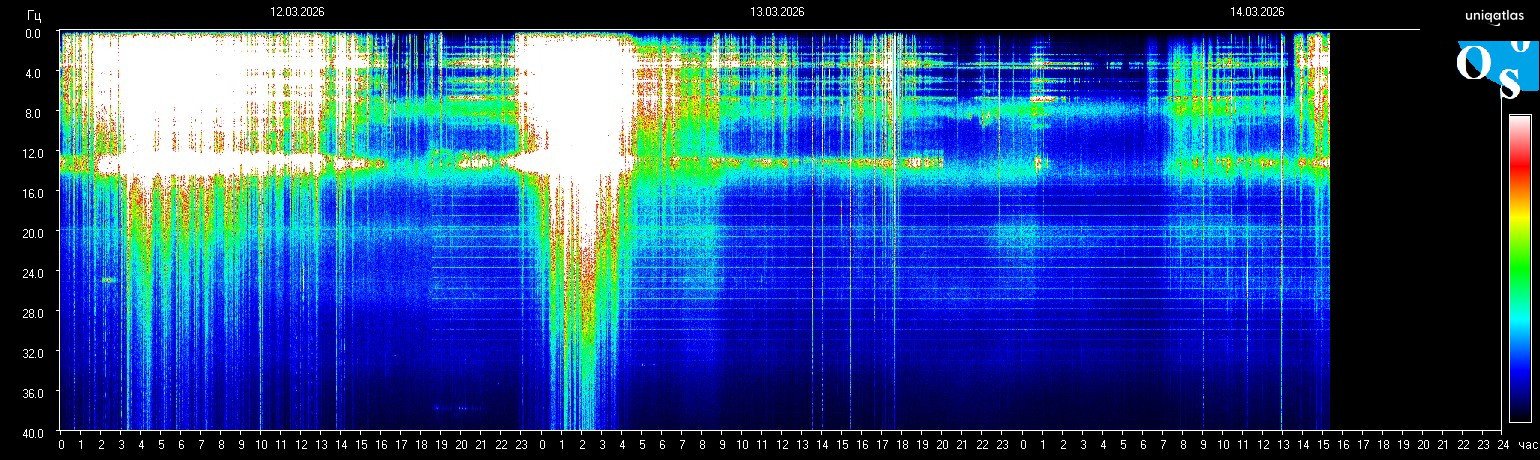
The search term 7.83 Hz meaning appears again and again because people want to know whether that number is symbolic, scientific, or both. In Schumann monitoring, 7.83 Hz is most often treated as the familiar base region of the fundamental mode, but the meaning becomes clearer when you place it inside the full chart instead of treating it like a standalone miracle number.
Why 7.83 Hz matters
The Earth-ionosphere cavity supports resonant behavior in extremely low frequencies. In that context, roughly 7.83 Hz is commonly referenced as the best-known fundamental Schumann mode. That is why dashboards, articles, and live commentary frequently treat it as the baseline band people recognize first.
What it does and does not mean
- It does mean you are looking at the best-known base region in Schumann resonance monitoring.
- It does not mean that every visible move above or below it is a dramatic permanent shift in the Earth itself.
- It does not prove a medical effect, a spiritual event, or one universal cause without much more context.
Why context matters more than one number
A live frame can show 7.83 Hz near the baseline while amplitude, noise, or harmonics are doing something very different. That is why the better question is not only “is it at 7.83?” but “what do the harmonics, intensity, and timestamp show around that base band right now?”
How to read 7.83 Hz correctly
- Use the home page to check the freshest live frame.
- Compare the main band with harmonics and visible amplitude rather than quoting one isolated reading.
- Use the today summary to judge whether the base band is stable, compressed, noisy, or part of a broader active window.
7.83 Hz is best read as a reference band, not as a shortcut that replaces the full chart, timing context, and source limitations.
Best next step
If you want to see how the base band behaves in real time, keep the live homepage open and then use the live guide to connect the familiar 7.83 Hz idea with the actual spectrogram structure.
Stay inside the same topic cluster
Learn how to read charts, spikes, whiteouts, and spectrogram structure without mistaking noise for a real signal.
See the latest Schumann frame on the homepage
The homepage updates around the newest spectrogram frame, current frequency, and fast context. Open it first if you want the freshest signal before you keep reading.
Live frequency, latest frame, and short context update together.
Editorial Note
Schumann Resonance Live treats Schumann charts as environmental monitoring data, not medical diagnosis. For source limits and corrections, review Methodology and Editorial Standards.
