Schumann Resonance and Solar Flares: What Space Weather Can Actually Influence
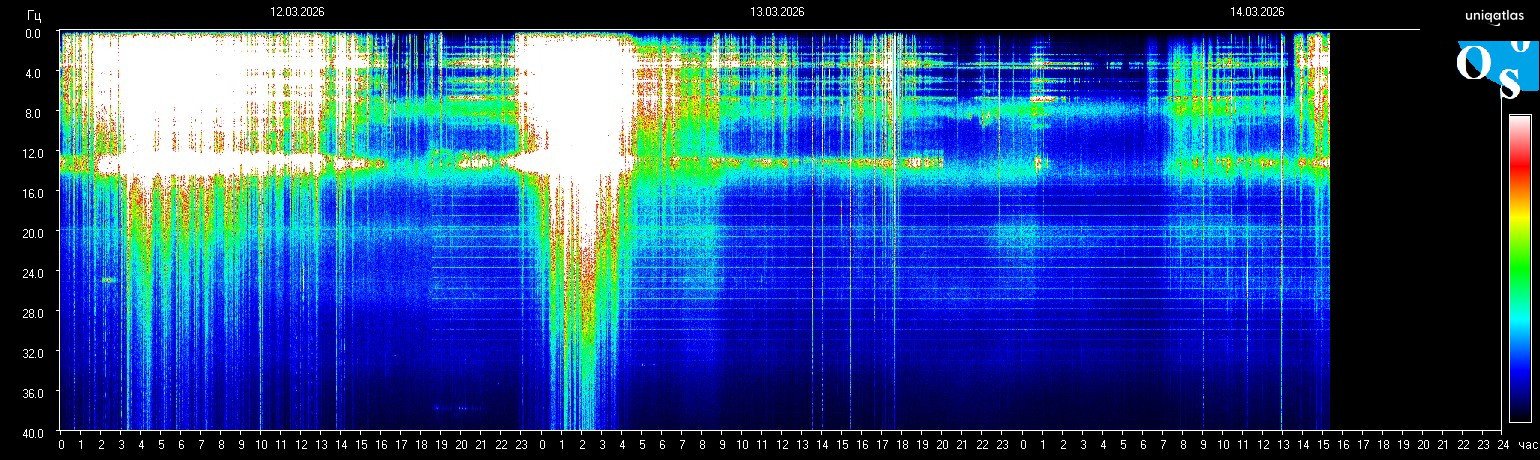
The search phrase Schumann resonance solar flares exists for a reason: people often notice an active day on the chart and immediately ask whether the Sun is behind it. That is a sensible question. The careful answer is that solar flares and wider space-weather conditions can influence the monitoring environment indirectly, but one bright Schumann image still needs context before you claim a clean one-to-one cause.
How solar activity can matter
- Solar flares can change upper-atmosphere and ionospheric conditions.
- Geomagnetic storms can alter the broader electromagnetic environment around Earth.
- Ionospheric changes can affect how resonance behavior appears in monitoring systems.
- Local station conditions still matter and can complicate what one frame looks like.
What this does not mean
It does not mean every active Schumann frame automatically proves a solar flare caused the whole image. A chart may look more intense because of amplitude expansion, noise, clipping, local interference, or a combination of factors. Space weather is part of the context, not an instant shortcut to certainty.
How to read a possible solar-linked day
- Check the newest live frame first.
- Compare the move with the today page to see whether it is sustained.
- Use the methodology page so you do not confuse display behavior with a proven global driver.
Why space weather is still useful context
Even when it is not a perfect explanation, space weather remains valuable context because it helps readers think beyond one screenshot. It encourages comparison, timing checks, and more disciplined interpretation. That alone is better than declaring that a chart “exploded” for one simple reason.
What careful language looks like
Careful language sounds like this: “Today’s chart may be consistent with a more active upper-atmosphere or geomagnetic context, but the live image alone does not prove a single solar cause.” That framing is more accurate and more durable.
Solar flares can be relevant context for Schumann monitoring. They are not a license to treat every bright frame as a solved explanation.
Best next step
If you suspect the latest chart aligns with stronger space-weather conditions, keep the live homepage open, compare it against the today panel, and use the live guide before you label the move as a direct solar-driven event.
Stay inside the same topic cluster
Learn how to read charts, spikes, whiteouts, and spectrogram structure without mistaking noise for a real signal.
See the latest Schumann frame on the homepage
The homepage updates around the newest spectrogram frame, current frequency, and fast context. Open it first if you want the freshest signal before you keep reading.
Live frequency, latest frame, and short context update together.
Editorial Note
Schumann Resonance Live treats Schumann charts as environmental monitoring data, not medical diagnosis. For source limits and corrections, review Methodology and Editorial Standards.