トムスクSOS局:地球の電磁パルスへのシベリアの窓
Deep in the Siberian taiga, the Tomsk Space Observing System has monitored Earth's resonant frequencies for decades. Discover the history, technology, and daily operations of this crucial monitoring station.
A Station in the Taiga
The Tomsk Space Observing System (SOS) , operated by the Siberian Institute of Physics and Technology, is one of the world's most important facilities for monitoring Schumann resonance. Located near Tomsk, Russia, deep in the Siberian taiga, its remote location provides exceptionally low electromagnetic noise — a critical requirement for measuring the faint Schumann signals.
Technical Specifications
The station uses three orthogonal induction coil magnetometers to measure the magnetic field components in the ULF (Ultra Low Frequency) range of 0–40 Hz. Key specifications:
- Sensitivity: ~1 pT sensitivity at 7.83 Hz
- Sampling rate: 50 samples per second per channel
- Dynamic range: 120 dB
- Frequency resolution: 0.01 Hz
The Daily Spectrogram
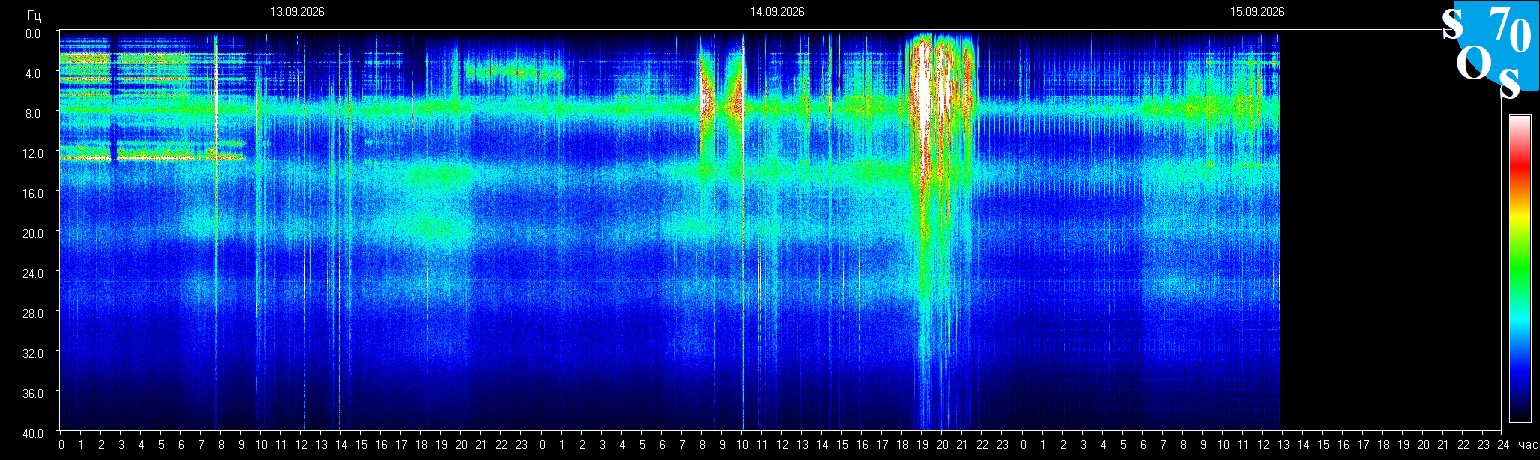
Every 24 hours, Tomsk SOS publishes the now-famous spectrogram image that powers the SRL Observatory. This image represents:
- X-axis: UTC time (00:00–23:59)
- Y-axis: Frequency (0–40 Hz)
- Color: Amplitude of the EM signal
Data Processing
Raw magnetometer data undergoes several processing stages:
- Pre-amplification at the sensor site
- Digital conversion with 24-bit ADC
- FFT analysis to generate frequency-domain data
- Image rendering for the public spectrogram
Global Importance
While other stations exist — in Antarctica, Hawaii, and across Europe — Tomsk SOS is unique for its continuous operation, data accessibility, and exceptionally clean signal due to its remote location. It has become the de facto standard reference for Schumann resonance enthusiasts worldwide.
Accessing the Data
The raw spectrogram is freely available at sos70.ru, and the SRL platform enhances this data with real-time analysis, multilingual translations, and community features.